

Analog=Messy, and that's what sets us free
Digital space is a breeding ground for creative blocks

How do you start your first blog post without sounding like a buffoon?
I don’t know.
So we’re all going to pretend this was a great start and just dive right on in.
Let’s start off with me admitting a fact that I’m super embarrassed about, just to get it out of the way. This way I won’t ever have to pretend to be cooler than I am, and you’ll all understand that this blog exists to help me do the work, not brag about how great I am at doing the work.
Deep breath
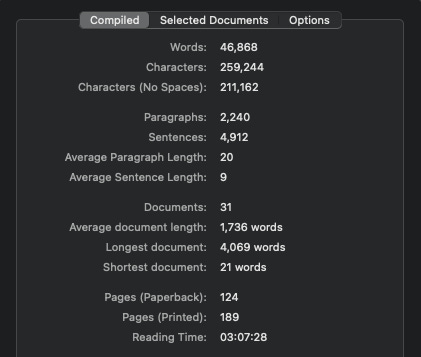
Okay, so, I’ve been writing more or less full-time since I was fired from a sales job two years ago. In that time, I have yet to finish a draft of a book. In fact, the only draft of anything I’ve finished was a short story about a giant angler fish that everyone seems to love but no one wants to publish. I’ve started 6 books. Written about 30K words each in them. All of them sit abandoned in the graveyard of my Scrivener drafts folder.
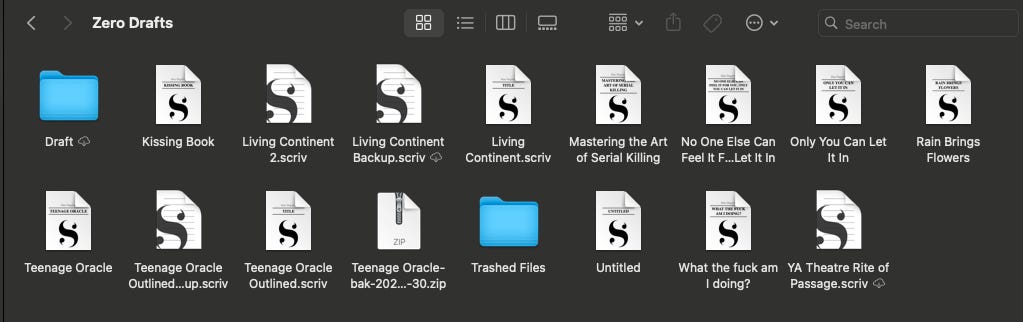
Some were abandoned because I decided I didn’t like my story enough to write a whole book of it. Some were abandoned because I had a major mental health setback. Some were abandoned because my ADHD made the grass greener somewhere else, but then I abandoned those too.
Each time I believed that the next project would be the first one I finished. Usually, I believed that the problem lay with the project, and by switching to a “better” or “easier” story, I would finally be able to finish.
Well, this idea turned out, I think, to be absolute Hot Garbage™.
If you have ADHD, you know this shame. You probably also have a closet full of past hobbies you were obsessed with for a few weeks and then completely forgot about. If I had a dollar for every time I showed great promise at an activity and then underdelivered, you’d have to eat me ‘cause I’d be rich. I’m like an expert at doing this. It’s the only reality I’ve ever known, and it pretty much doesn’t bother me anymore…except for these damn books.
The reason these 6 books hurt me way more than the pile of crocheting supplies, watercolors, dog grooming equipment, and gardening tools is because, unlike those other things, this passion—this desire to write—is still strong after 2 full years of trying. For the most part, I’ve sat down every day for several hours intending to write and finish something.
And yet I feel as if I have nothing to show for it.
(This is not true, but that’s a different blog post)
Then, sometime around April of this year, I made some big personal changes and as a result, I committed to finishing the draft I was working on…no matter what. No switching, no abandoning. This mf-er is going to have a beginning, a middle, and an end.
It’s important to note that those big changes involved finally getting the nerve up to talk to my doctor about anxiety meds. This was a 34-year journey, and also the subject of another blog post. The difference between before and after was truly night and day. Be gentle with yourself if anxiety rules your day and body. Talk to your doctor. If your doctor sucks, keep looking for one who will listen. You are not alone. You deserve to feel inner peace.
Once my mental health started to return, it was like I was waking up after decades. I felt like myself again and realized just how far from myself I’d gotten. This security and inner peace made it possible for me to see the real culprit behind my 6 abandoned books.
Perfectionism.
How Perfectionism Killed My Books
This son of a gun wears so many different hats, that it can be easy to miss. Sometimes it looks like people-pleasing, sometimes it looks like compulsive cleaning, actually like a lot of compulsive behaviors. In this scenario, it looked like first drafts that always felt like I was starting over with every sentence because I couldn’t move on past the “bad writing”.
My story ideas were great, and then I’d start typing and cringed at each word.
“It’s total shit.” My inner critic would say.
“Yes, but it’s a first draft.” I tried to argue back.
“Who are you kidding? Go fix it right now.” The critic sneered.
I believed that voice. I listened to it. For a while, it was so internalized, that I didn’t even realize not listening to it was an option. Then, when I did, it shouted even louder over every thought I tried to replace it with.
The Way Out
My mistake was trying to think my way out of it. I now know that when my inner critic starts to derail things, I need to do something.
This understanding led me down a path of experiments. Instead of just staring at a blank page, I tried going for a walk. Then I tried playing with my dogs. Then I tried doing some crafts. Then I tried making a meal. Then yoga. And a myriad of other physical activities.
Honestly, all of them worked pretty well at stopping the voice. But that little villain came back with a vengeance every time I sat down to write.
I hemmed and hawed over 500 words a day and still hated them the next day. The scenes were boring and exposition-heavy. It was embarrassing writing that I am so glad no one but me will ever see.
I needed to figure out a way to get physical with the writing process too, not just the breaks.
Enter: A shitty $7 typewriter I found at a thrift store.
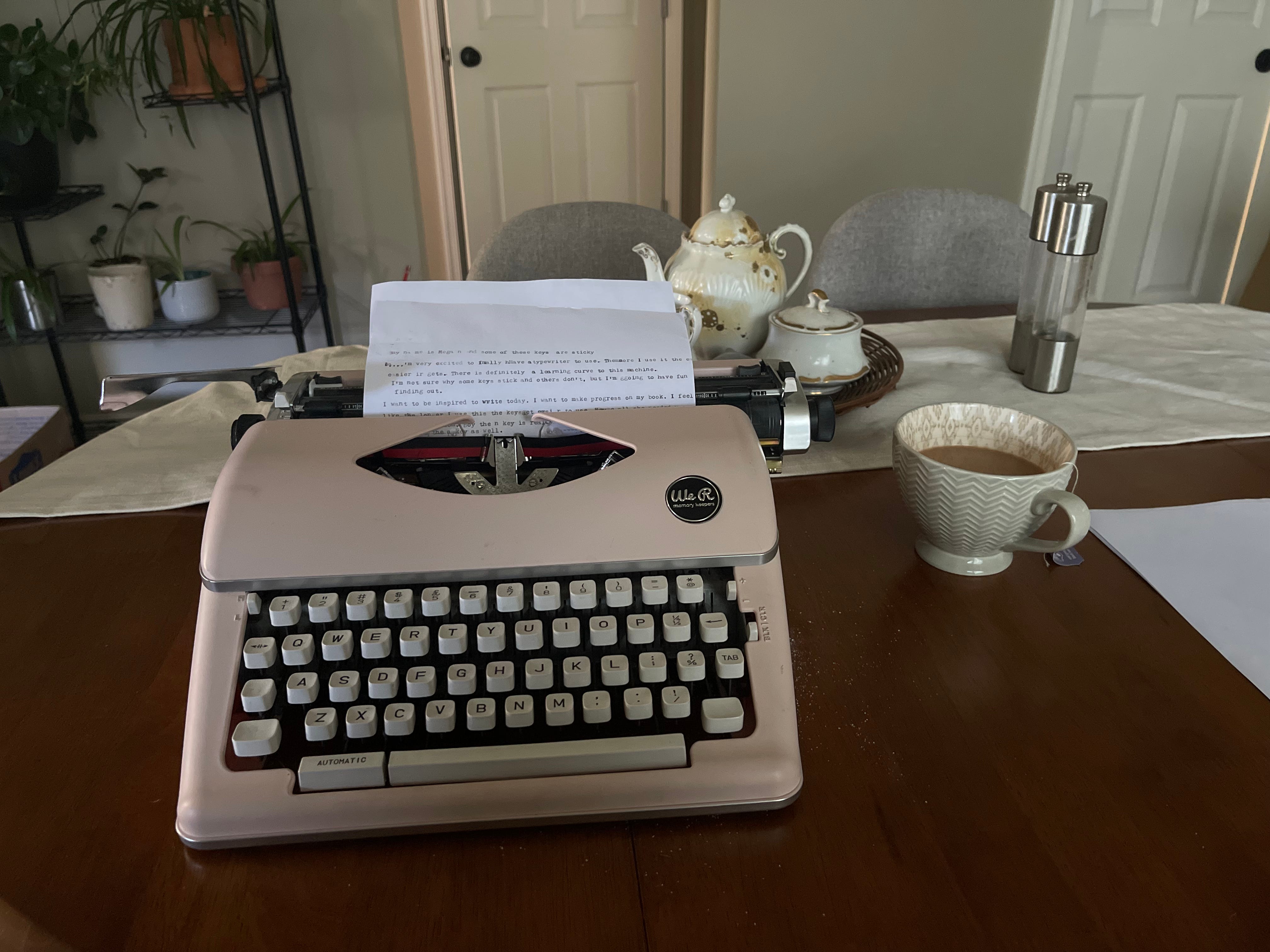
The first day I sat down to write with this thing, I zoomed out 6 full pages in about an hour. (That’s approximately 2,700 words).
Here’s the thing though, those pages were MESSY.
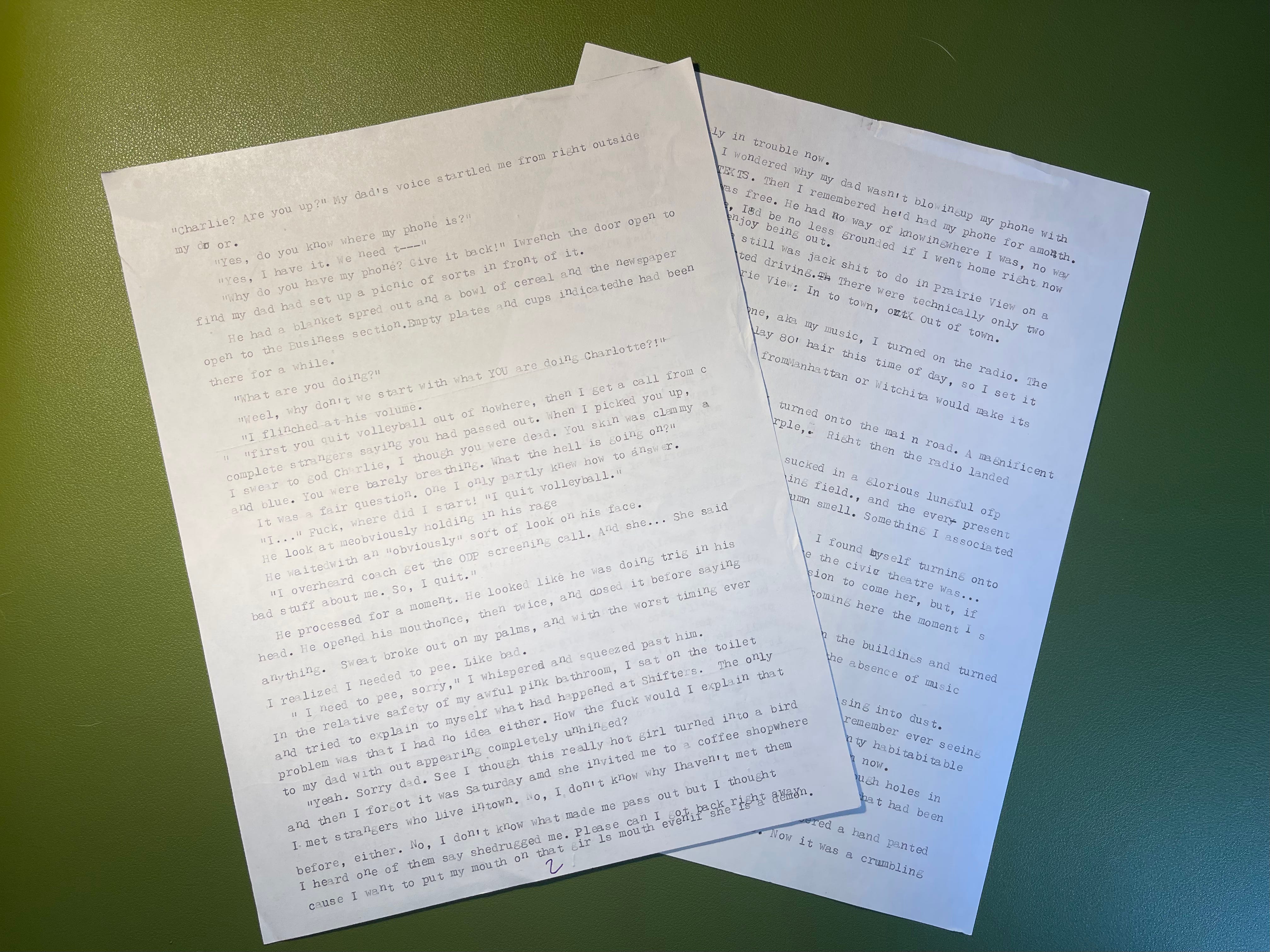
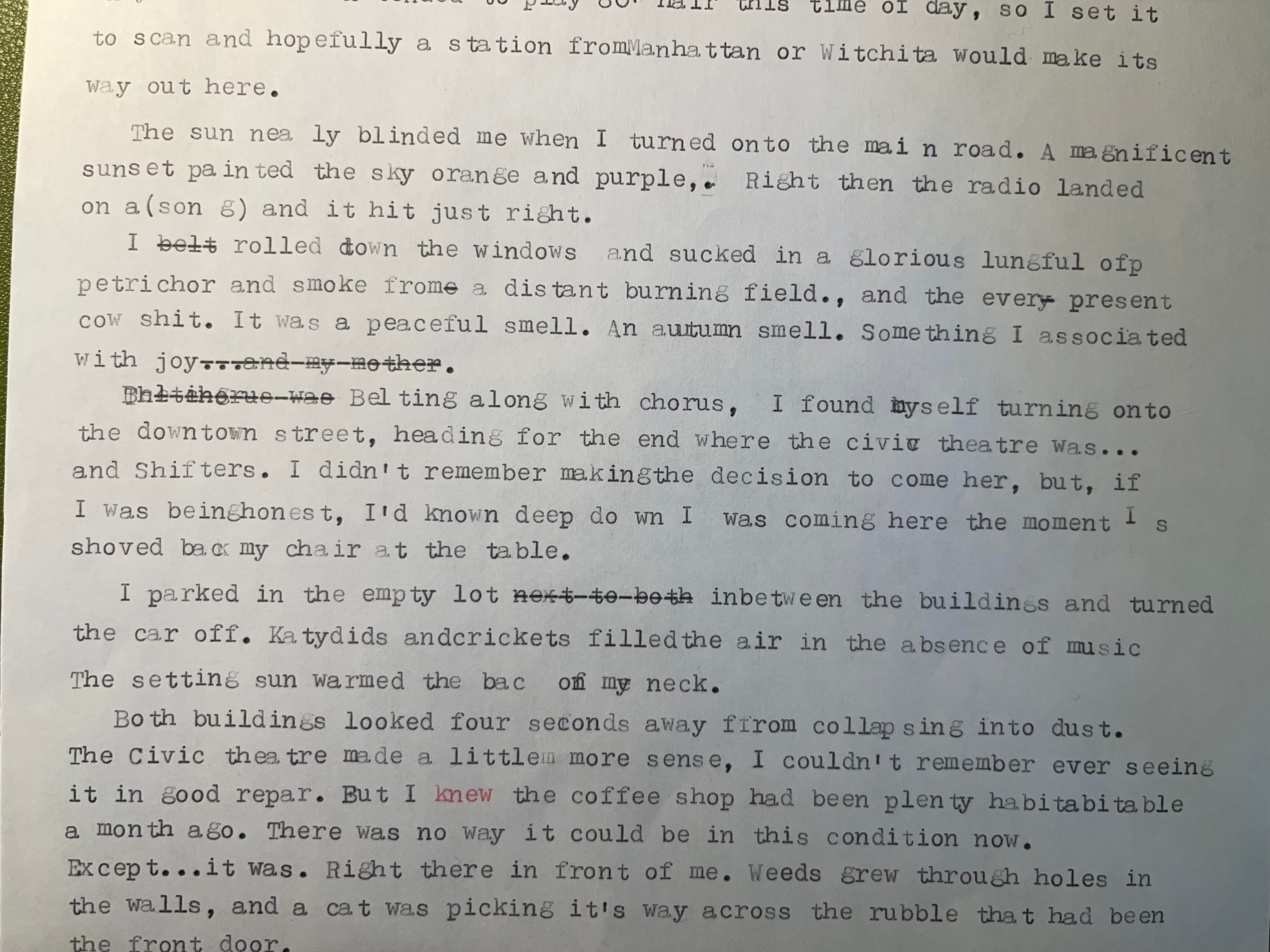
Turns out messy is exactly what I needed. I couldn’t hit delete, couldn’t go back. When I made a mistake, I just had to trust I’d fix it in the next draft and move on.
My friend Ras Bad of How to be Bad put it best:
“It’s super dopamine inducing!! And you can’t go back so it’s like, ‘yolo!!’”
Yolo indeed. I was finally creating. My inner critic was powerless.
In three days I spat out almost 10K words on my draft. Scenes started forming. Character voices emerged. The story moved from Act 1 into Act 2. I was elated! Finally, something had worked! I was writing! This draft was on its way to being finished!
And then, I got stuck. I stopped seeing what happened next in my story.
Don’t Panic! Trust the Process!
Naturally, this was devastating. The fear and shame returned like woah. But this time I had new coping methods!
Instead of giving up, I decided to try out a new craft I’d been eyeing on Pinterest. I ripped up some junk mail, soaked it in water, blended it into pulp, mixed it back in water, and sieved it into recycled paper.
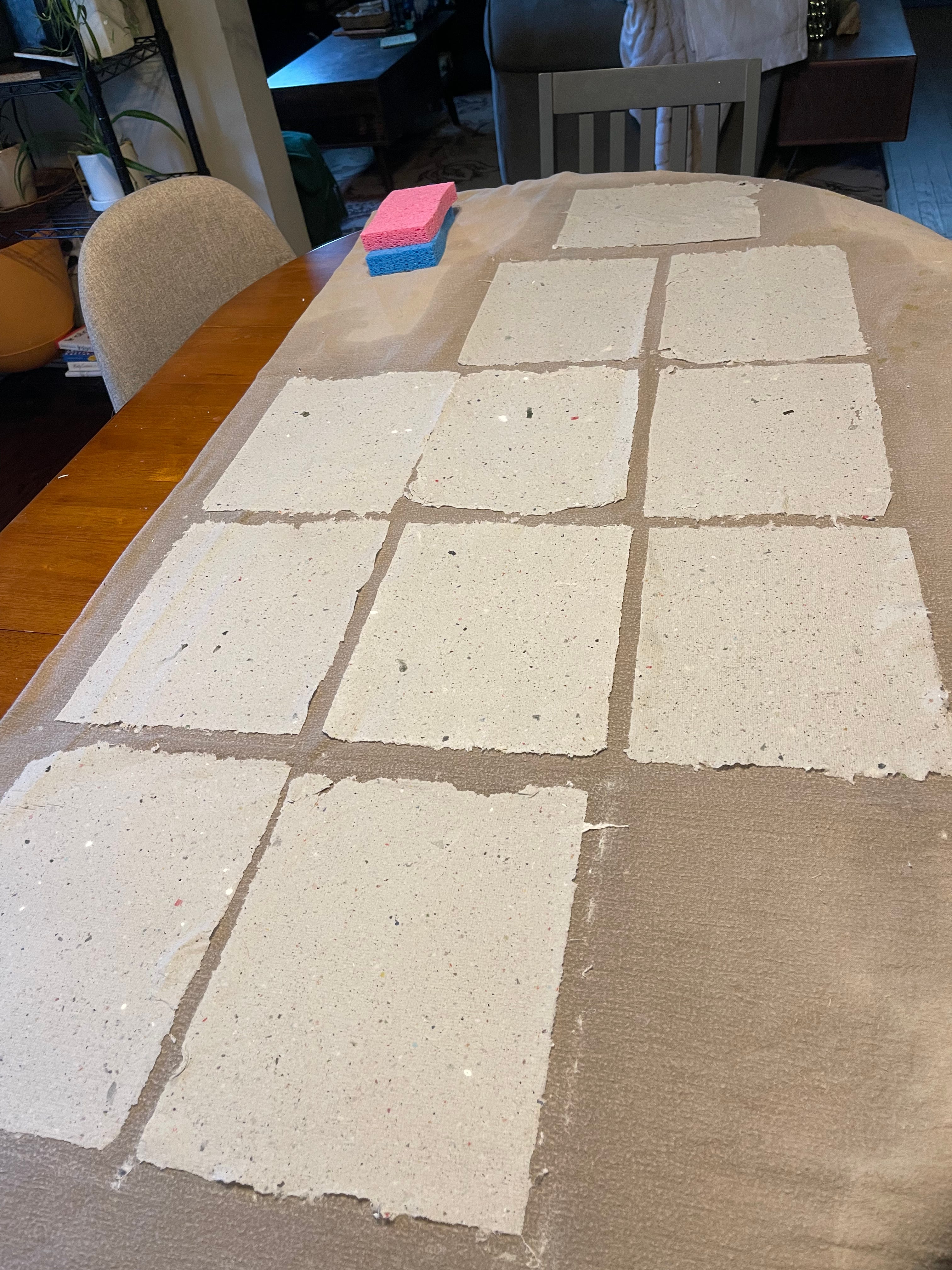
The process took several hours. It was a repetitive, physical task and my body relaxed into it with relief. I didn’t have to think at all, which was great, because my thinker was beat.
The next day I woke up to dried paper and a new idea for my story. It was a small idea, maybe half a scene, but it was more than I’d had the day before. I sat down to my new pink best friend and typed it out.
Once I got going, several more messy, creative pages came out. Then, after a few hours, I felt empty again. The movie in my head had stopped playing.
So I decided to make some more paper.
Fun Fact: Paper dries in about a third of the time if you press it onto a window after it’s had time to set up a bit.
This quickly became a routine. Papermaking is such a long process but can be broken up into pretty conveniently timed chunks. Several days passed where I would write for a few hours in the morning, and take a break by ripping up junk mail or pressing out new sheets of paper. I even added handbinding the new pages into books with materials from around the house.
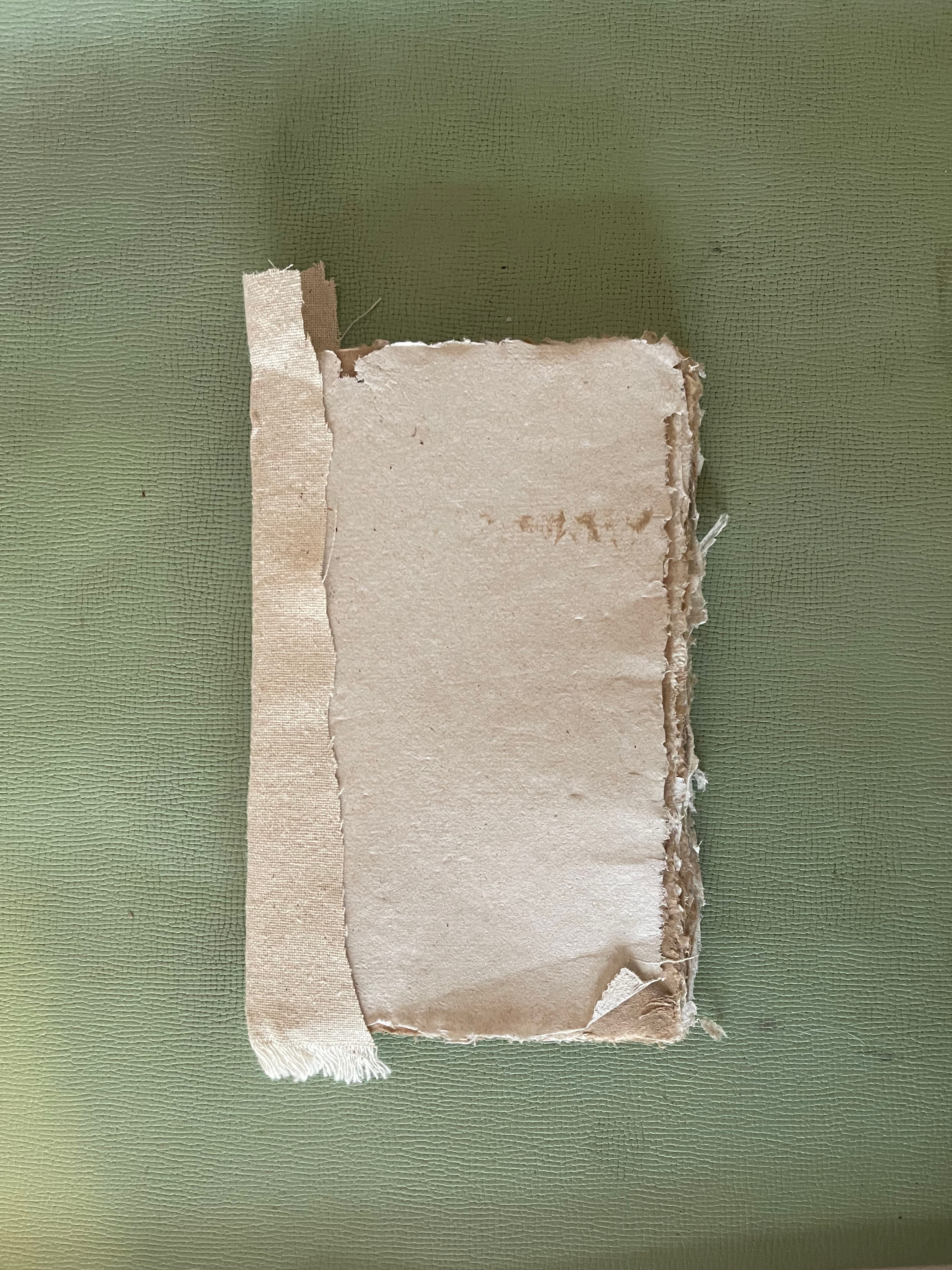
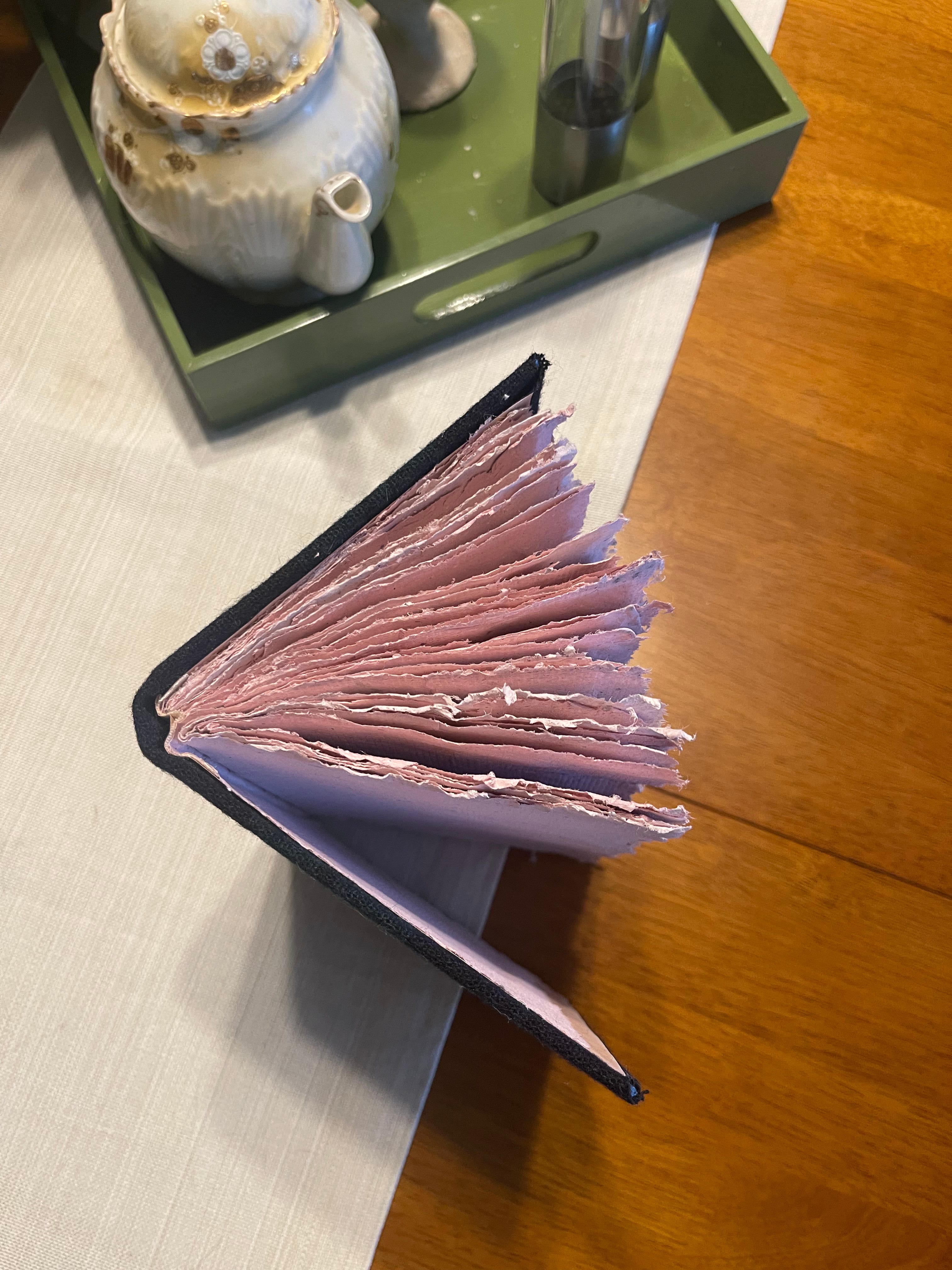
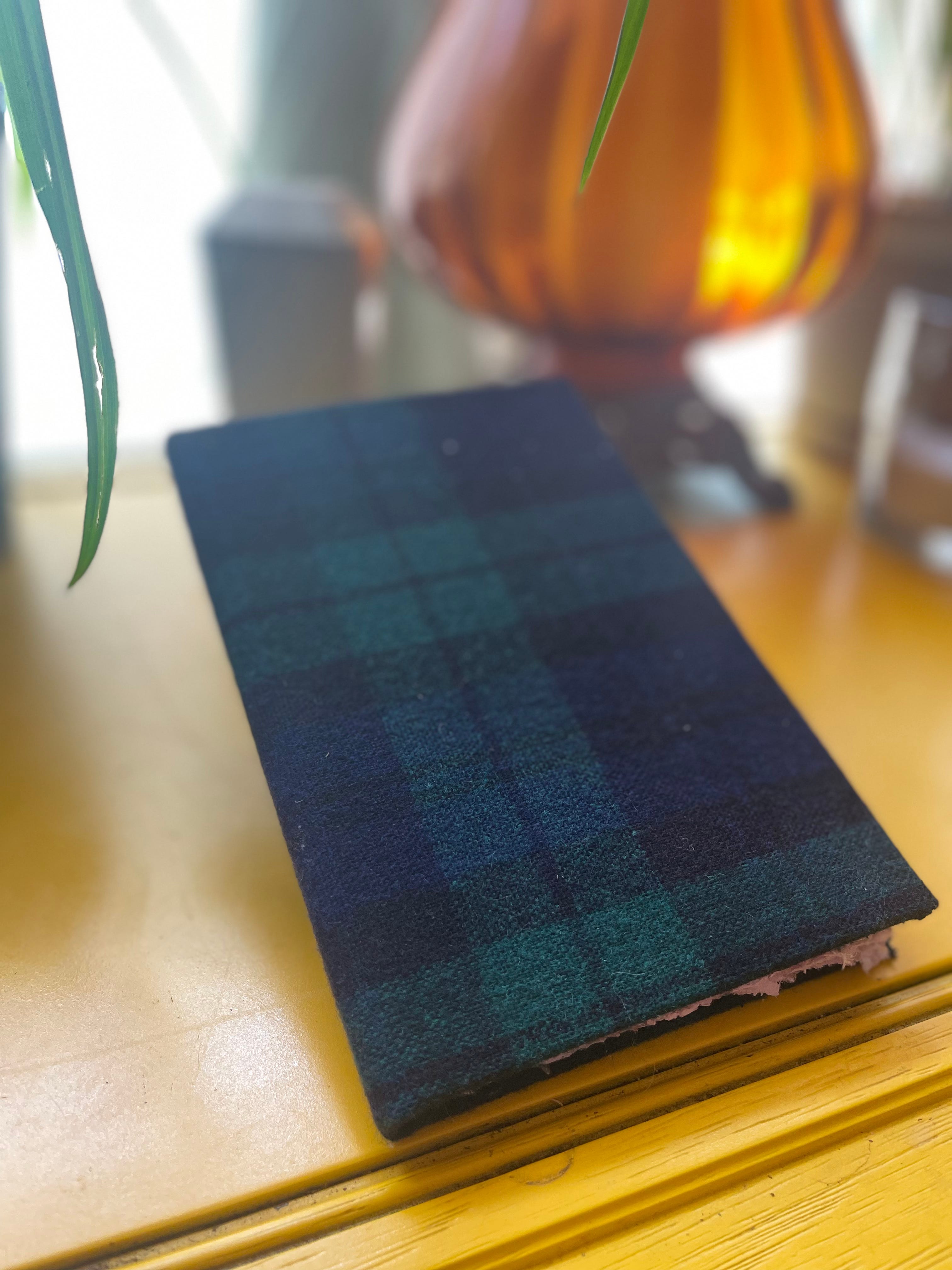
All of this can only happen for me outside of any sort of digital space. My perfectionism can’t drive, because there’s no delete button.
This is how I finally crossed the 30K barrier I’d faced in every book before. These physical activities grounded me in my body and gave me time to process. They cleared out the inner critic junk and wordless screams of panic and left room for new ideas about the story to arrive. Then, my sweet sweet analog typewriter made getting into a creative flow possible, and those ideas took physical shape as paper and ink. All of this can only happen for me outside of any sort of digital space. My perfectionism can’t drive, because there’s no delete button.
It’s a constant cycle. I’m never done processing just like I’m never done creating. One fills my tank the other spends it. Too much of one or the other and the cycle breaks down. And, shocker, I am imperfect at keeping them balanced. But just like a typewriter, I can’t go back and delete my actions. I can only control how I adjust moving forward.
And therein lies the beauty and the freedom.
Thus I have discovered what countless others have discovered before me.
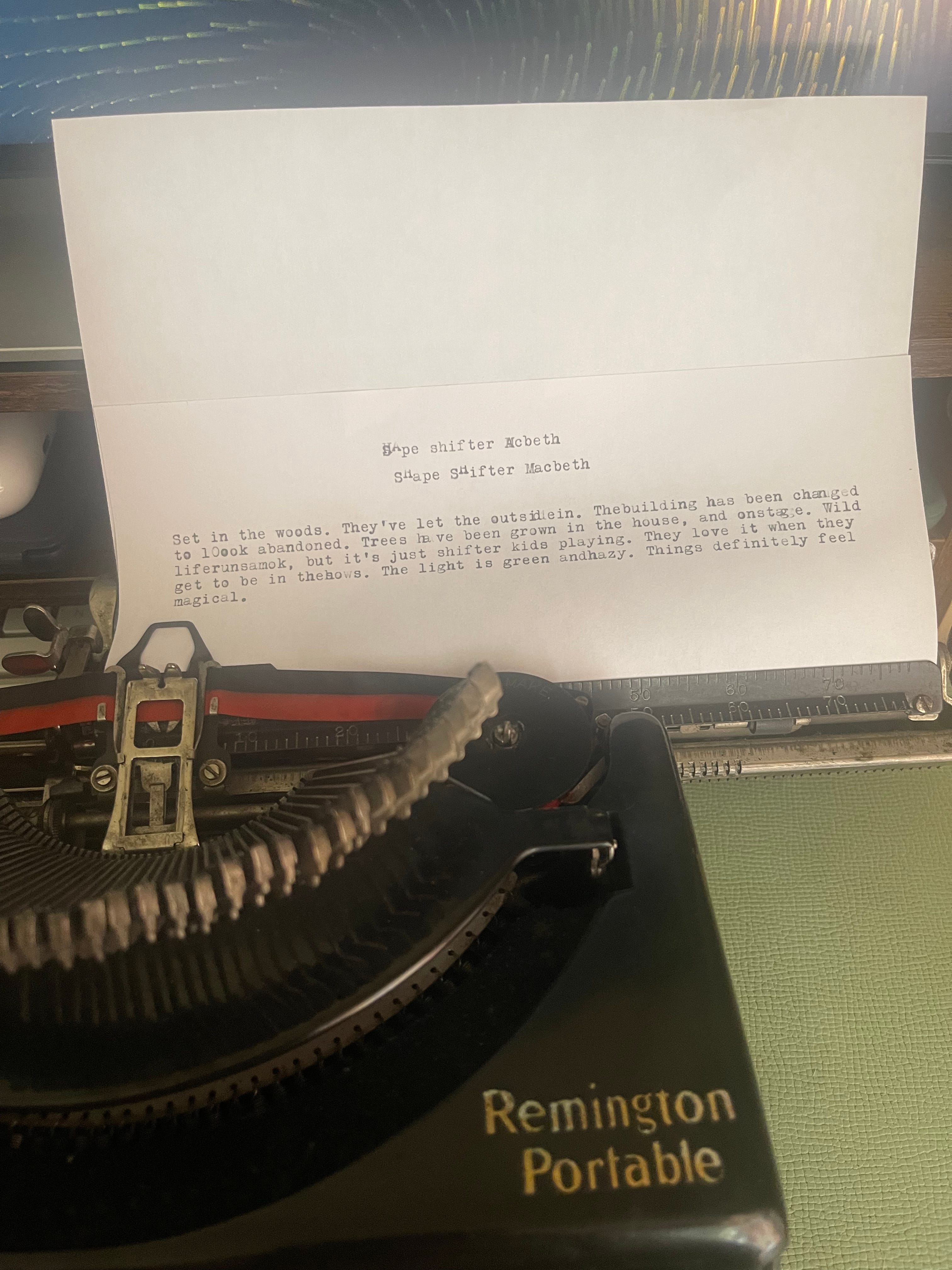
I’ve since let myself sink into these new special interests and bought a dead cute Remington Portable from 1924 that I found at an antique shop. It turned out to be unbelievably better at typing than my pink one and now the words zoom out even faster. Still messy…but yolo!
Making paper has become my “doing the dishes”. Easy, repetitive, restful, and something to be proud of when you are done. Having a physical thing to show for my time shushes the inner critic.
Thus I have discovered what countless others have discovered before me:
When you are stuck creatively, get analog, get physical, get grounded. Go somewhere where you can’t delete your mistakes.
It’s worked for tons of artists before us.
This collection of writers and their unique hobbies by Nicole Bianchi proves that alternating between your physical hobby and writing can produce some killer art.
This breakdown of the preferred writing tools of celebrated authors by Christopher Roosen is one of my all-time favorite reads. (Did you know James Joyce said the best writing implement was a CRAYON?!)
Conclusions
So, my new writing routine is as analog as possible—as messy as possible. And I am so pleased.
Obviously, I still need digital spaces too. You’re reading this on the internet after all. I’m not a monster, I have Gmail like everyone else. The digital space is great for a lot of things. Editing documents, doing your taxes, ordering Doordash… all great stuff that I have no desire to do the old-fashioned way. One thing, however, that I simply cannot do digitally anymore is create.
Anytime I’m stuck, getting grounded physically is my path to getting unstuck. First drafts happen “in the real world”—on a typewriter, or handwritten. For me, there are no exceptions. Even this post started out as a journal entry.
There’s no one way to create. Take what works of this and leave the rest. But, if I can convince you to try one thing with this post, when you are stuck, find a way to get physical with it. Be in your body, feel the discomfort of not being able to delete, and give yourself time there to process. I promise, no, I GUARANTEE something good will come from it.
Housekeeping
Time for the social media portion of our broadcast!
I loved this post! I can’t wait to see what other pieces of “Hot Garbage” you share!!